You currently do not have any products in your cart.

-
Sustainability & Environment
-
Environmental Innovation
-
Premium Quality ā Made in Europe
-
Ultimate Protection & Care
-
Efficiency & Cost Savings
NanoEnzo and the National Environmental Vision: Sustainable Protection for a Better Living Environment
The National Environmental Vision (NOVI) sets the course for the physical living environment in the Netherlands. NanoEnzo helps municipalities and governments with sustainable nanocoating to protect materials and reduce costs.
Home Municipalities and Government
Protect What Already Exists – Extending the Life of Materials in Public Spaces
Less maintenance. Less transport. Less replacement. Lower whole-life impact.
Across the UK, local authorities, infrastructure owners and public-sector organisations face the same challenge: how do we reduce carbon emissions and environmental impact while maintaining public spaces and infrastructure with increasingly limited resources?
The answer does not always have to be replacement.
At NanoEnzo, we believe there is significant value in protecting the materials and assets that are already in place.
Protect what already exists. Maintain it less. Replace it later.
This approach fits naturally with the growing UK focus on whole-life carbon, sustainable public procurement and better lifecycle management of buildings and infrastructure.
Sustainability starts with extending service life
Concrete, brick, natural stone, paving, metal, glass, wood and other construction materials already contain an environmental investment.
Raw materials have been extracted. Products have been manufactured. Materials have been transported and installed.
Replacing them starts much of that process again.
Preventive surface protection can help extend the useful life of existing materials by reducing the impact of moisture, contamination, weathering and other environmental influences.
For public authorities and asset managers, this creates a different way of thinking:
before asking what a material should be replaced with, first ask whether its existing service life can be extended.
A growing focus on Whole Life Carbon
This principle is becoming increasingly relevant in the UK.
The UK Government's Whole Life Carbon Management guidance, published in 2026, promotes a holistic approach to reducing emissions throughout the lifecycle of infrastructure and the built environment.
The Construction Playbook also encourages public authorities to use whole-life carbon approaches when assessing and delivering public works.
This means looking beyond initial construction or purchase costs and considering the environmental impact created throughout an asset's life.
For NanoEnzo, that creates an important opportunity:
lifecycle extension can be part of carbon reduction.
If an existing surface can remain in service longer, the environmental impact associated with replacement can potentially be postponed as well.
Less maintenance also means less transport
The transition to electric vehicles is an important part of reducing urban emissions.
But there is another consideration:
the lowest-impact maintenance journey may be the one that no longer needs to take place.
Every cleaning, maintenance or replacement activity can involve people, vehicles, equipment, water, cleaning products and materials.
Reducing the frequency of these interventions can therefore have benefits beyond the protected surface itself.
Fewer maintenance cycles can mean fewer vehicle movements, less equipment deployment, lower consumption of cleaning products and less transportation of replacement materials and waste.
This can be particularly valuable in busy city centres and other locations where access, congestion and emissions are increasingly important considerations.
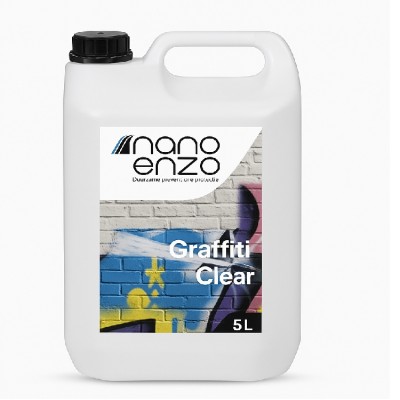
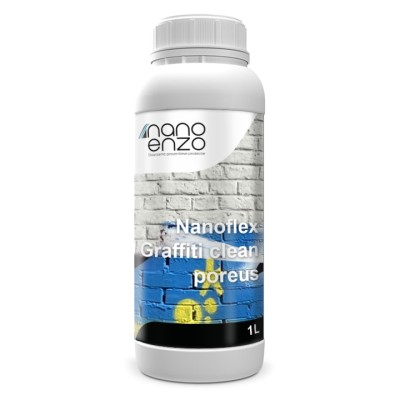
Graffiti is a good example
Graffiti demonstrates how preventive protection can change the maintenance cycle.
On untreated porous materials such as concrete, brick and natural stone, paints and pigments can penetrate the surface. Removal can then require intensive cleaning, specialist products, water, equipment and repeated site visits.
A suitable anti-graffiti coating creates a protective barrier between the graffiti and the original substrate.
This can make subsequent graffiti removal easier while reducing the need for aggressive treatment of the underlying material.
The potential benefit is much broader than appearance alone:
less intensive cleaning, fewer labour hours, reduced water and chemical use, fewer maintenance visits and better protection of the original material.
Potential applications include underpasses, tunnels, car parks, railway environments, street furniture, public buildings, concrete structures and other graffiti-sensitive assets.
The principle is simple:
do not wait for contamination to become damage – protect the surface in advance.
From replacement to lifecycle management
The same philosophy applies to many other public-space assets.
A weathered paving stone, concrete element, façade or piece of street furniture does not necessarily need to be replaced simply because it has become dirty or aesthetically degraded.
Cleaning, restoring and subsequently protecting existing materials can provide an alternative.
This introduces another dimension to circularity.
Circularity is not only about recycling materials at the end of their life. It is also about preventing them from reaching the end of their useful life too soon.
Extending service life can reduce demand for new materials and postpone manufacturing, transportation, installation and waste.
Applications across the public realm
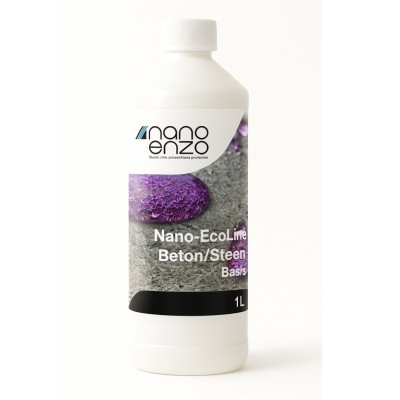
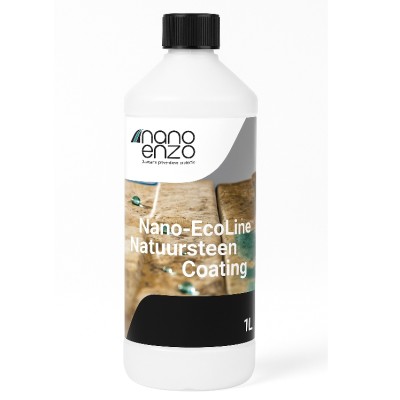
NanoEnzo surface protection technologies can be considered for a wide range of materials and assets, including:
-
concrete structures;
-
paving and public squares;
-
brick and masonry;
-
natural stone;
-
façades and public buildings;
-
tunnels and underpasses;
-
car parks;
-
metal and street furniture;
-
wood and plastics;
-
playground equipment;
-
glass;
-
monuments and heritage assets.
The appropriate solution depends on the substrate, environmental exposure and required performance.
That is why we prefer to look beyond the cost per square metre and consider the wider maintenance cycle.
The real business case is what happens afterwards
Instead of asking only:
“How much does it cost to protect this surface?”
we believe asset owners should also ask:
“What cleaning, maintenance, transport and replacement could this help us avoid or postpone over the coming years?”
That is where lifecycle protection becomes commercially interesting.
Lower maintenance frequency can mean lower operational expenditure. Extending material life can postpone capital expenditure. Fewer interventions can reduce transport and resource consumption.
And preserving existing materials can contribute to reducing their whole-life environmental impact.
Supporting UK sustainability objectives
The UK National Planning Policy Framework promotes the prudent use of natural resources, minimising waste and pollution and the transition towards a low-carbon economy. It also encourages the reuse of existing resources as part of the response to climate change.
Together with the growing focus on Whole Life Carbon, this creates a strong case for looking differently at existing infrastructure and public assets.
Not everything needs to be replaced to become more sustainable.
Sometimes the smarter solution is to protect, preserve and extend.
Preserve first. Replace later.
At NanoEnzo, we believe some of the easiest sustainability gains can be found in materials that have already been manufactured, transported and installed.
Maintain less.
Transport less.
Replace less.
Use longer.
For local authorities, infrastructure owners, contractors and public-sector asset managers, this creates an opportunity to combine environmental objectives with practical reductions in maintenance and lifecycle costs.
Before replacing an existing surface or asset, it is worth asking one more question:
Can we protect it and keep it in service for longer?
NanoEnzo works with organisations to explore exactly that opportunity.
NanoEnzo – extending service life starts with protecting what already exists.